See GRANTS page for a list of the successful applicants
PAUL DAWSON-BOWLING (1941-2025)
We are sorry to tell you that our long-standing member Paul D-B died recently. His daughter Leonora writes:
The sad news may have reached you by now that our dear father, Paul Dawson-Bowling, died a bit over a week ago on 26th July. It was a complete shock after a short illness, and we’re missing him awfully, but I’m also very glad he didn’t have a drawn-out time of it, in pain or distress, or no longer his gently but ineffably bright self. (Even his stroke some 7 or 8 years ago only marginally dented that wonderfully ever-curious mind of his.) Thanks to the many of you who have been in touch with messages of sympathy and support, and my apologies for not managing to reply to all individually, but they have meant a lot to me, Jennifer, Sebastian and Melissa.
We are holding Dad’s funeral on Tuesday 26th August at our family parish church, St Mary of Charity, in Faversham, where he was a well-loved local family doctor and central pillar of the community since the family moved to Faversham in 1979.
JEAN ANDERSON ( 1933 – 2025)
It is with much regret that we have learnt of the death of Jean at the age of 91. Born and brought up in East Kent, at Temple Ewell near Dover, Jean was, despite her quiet and unassuming manner, something of a trailblazer in life.
Having gained admission to Oxford University at a time when only a small minority of places was available to women, after graduation Jean qualified as a solicitor, when that profession was still predominately a male institution.
As a partner with Frederic Hall & Co in Folkestone, she was highly regarded as a specialist in matrimonial law, and widely respected for her skills in diplomacy, always seeking a civilised resolution between parties, without conflict. She was also a key member of the Kent Law Society, becoming its first ever woman President.
For many years she was married to Ross Anderson, a highly thought -of musician, a larger than life character and always lively company. They are survived by a son James and a daughter Elspeth, and four grand-children.
Ross and Jean retired to Elham , where they took an active part in village life, including that of the church. After Ross died in 2002, Jean continued to live in Elham until failing health caused her to move to Hampshire a few years ago to be with her son James and his family.
Jean played an unique role in the East Kent branch of the Oxford University Society, having joined in the PT (pre-Talbot Penner) era in1993, and remaining closely associated as it developed into its current form – becoming Secretary in 2000, Treasurer in 2003 , and its first ever lady Chairman from 2006 to 2011.
Jean will be remembered with gratitude and great affection by all of us who had the pleasure of knowing her.
MARTIN TAYLOR
Another sad loss: Martin, a long standing member, Canterbury historian and guide and chief promoter of the Bertha & Ethelbert statues on Lady Wootton’s Green died recently – more information later.
MARGARET SPARKS
We are sad to report that Henry Sparks, Margaret’s son, sent us the following message:
SPARKS, Dr Margaret Joan, FSA, died peacefully on the 22nd of October 2023 aged 93 in Swanage, Dorset. She lived for many years in Canterbury and was the Consultant Historian to the Dean and Chapter of Canterbury Cathedral. She was wife to the late Reverend Professor H.F.D.Sparks.
MICHAEL STEED
‘Liberal party activist and psephologist who provided statistics for general election guides’ read the headline for the Guardian obituary (6th October 2023) for Michael, who died on 30th August. He was a prominent member of the Liberal party, and stood unsuccessfully several times for Parliament – his only electoral success was winning a seat on the Canterbury City Council in 2008. He lectured in government at Manchester University 1966-1987, but will chiefly be remembered as the inventor of the Swingometer, that popular feature of BBC TV election cover.
OSMAN DURRANI
More sad news: we have to report the death on 9th May of our member Osman Durrani, Emeritus Professor of German at the University of Canterbury, at the age of 77. We send our warmest sympathy to his wife Lorna and his family.
Many of you will remember the ‘fireside chat’ about the Faust legend he gave at our Christmas meeting some years ago, in which he mentioned the controversy raging in German cultural circles about Hamlet, Prince of Denmark’s lodgings at the University of Wittenberg: the question being, was he in room 2B or not 2B?
At Osman’s funeral on 12th June, his lifelong friend Nicholas Bray read the eulogy, part of which is given below:
“My friendship with Osman dates back to our student days at Oxford. When Lorna asked me to say a few words today, two thoughts came to my mind.
The first was the phrase “a friend for all seasons” – echoing the well-known characterization of Henry VIII’s Lord High Chancellor Thomas More as “a man for all seasons”.
The second was the image of Dr Faustus, or Faust – the legendary 16th century German scholar and alchemist known for his thirst for knowledge and for experiences both intellectual and sensual, who was one of the main objects of Osman’s academic studies.
We both studied German at Magdalen College, and we both had rooms on the ground floor of Magdalen’s Waynflete Building. This was a tasteless late-1950s red-brick construction that John Betjeman once said he would like to blow up. Osman had already spent a year there when I arrived in October 1966.
With Osman, I shared a tutor who was an authority on Kafka. This – and a shared sensitivity to the fragility of human endeavour – forged a bond that we maintained until it was so sadly cut last month.
Osman chose Magdalen because on a visit to Oxford he had been impressed by its beauty. Magdalen chose him for his intellect and fluent German and awarded him a scholarship.
Like Faust, Osman was possessed of seemingly limitless curiosity. He also studied Italian and he lapped up learning in other areas, from English literature to theology. He later went to learn Arabic in Cairo and in Lebanon.
In his second year, most of his contemporaries moved to the main college, but Osman stayed on in the Waynflete. Unlike rooms in college, which were organized by staircases, rooms in the Waynflete were allocated along corridors, which gave a different sense of community. Our corridor also hosted an Icelandic philosopher, an American biologist, a member of the Young Conservatives, and a history student with connections in Palestine, Charles Boase, another lifelong friend who is here today.
Snapshots of our time in the Waynflete Building include an interesting experiment in pyrotechnics. This involved one of us unfurling a roll of lavatory paper – of the old-fashioned kind rather than today’s soft tissue – from the top fifth-floor landing down through the well of the little-used rear staircase. At its base, the other would light a match and we would watch the resulting upwards conflagration with glee.
On a more serious front, Osman advised me on aspects of German literature and how to structure the weekly essays that were a staple of the Oxford diet.
In June 1968, he sat for his Finals with a green carnation in his buttonhole, the fruit of careful nurturing in a bottle of green ink. He was rewarded with a brilliant first-class degree.”
JAYNE COHEN
A sad message from Peter Morgan: Most members will be aware of the dreadfully sad news that Jayne died of her aggressive cancer in the early hours of 5th May. I understand that she died peacefully and in the final hours was only marginally aware but appeared to have some understanding, and even managed a smile. This reminds us of the quite exceptional bravery, and cheerfulness, with which Jayne faced her situation, and no doubt her pain.
Less than six weeks before, she had attended a committee meeting (in retrospect, at great personal sacrifice, though she didn’t show it) and only then did she tell us that she must give up the role of Secretary – though subsequently she found the strength and took the care to pass on the information and know-how which goes with the role.
At the very successful meeting on 29th May presented by Sir John Mummery, we had a plant, as a small gesture of your thanks, ready to present to Jayne, but sadly she was by then too ill to be there. I’m glad to say that Brian was able to take it to her so that she was able to enjoy it, however briefly; and typically, she somehow managed to send us a note of thanks. This exemplifies Jayne’s magnificent commitment to the Oxford Society. She made the role of Secretary her own and, in doing so, became a valued friend to many of you.
Not only was Jayne a dedicated member of the Society, but she also proved to be a highly efficient and businesslike Secretary, whilst combining this with patience, friendliness and the greatest kindness. Jayne never had a bad word for anyone, and in return everyone loved Jayne. In short, we have lost a very special person.
NEW TREASURER
Our Chairman, Peter Morgan, writes: I am very pleased to announce that David Hornsby has also kindly agreed to take over the role of Treasurer. I would like to express our thanks to Nigel Beevor who for several years (kindly extended beyond his original intention) has been an exemplary custodian of our accounts. His wise advice has also been greatly appreciated, and this will still be available to us as he remains a valued member of the Committee.
Talbot Penner:
Your Committee regrets to inform you of the very sad news of the death of Talbot Penner on 9th January 2023 after a prolonged illness. Talbot played a significant role in the development of our Society. He was particularly enthusiastic about our student grant scheme, whereby our members are encouraged to support pupils from East Kent schools who, in their first or second long vac at Oxford, need funds to assist their travels and studies. Talbot was a member of our society for over 25 years and greatly enjoyed our events, such as talks, visiting interesting places and pub lunches. He was an entertaining, social person. He and his wonderful wife Jackie were most generous hosts in their house in Eastry.
Grants 2022:
We gave two grants this year:
Jennifer Evans St Hilda’s College. To assist with her stay at the Sorbonne in Paris where she will study Sociology. Apollon Alexopoulos St Hugh’s College. To enable him to stay in Oxford during the long vac to conduct research at the Jenner Institute into the development of novel HIV vaccines.
Grants 2021:
Another bumper crop of good applicants! We gave three grants this year:
Nicole Szekeres-Tapp. University College. Reading bio chemistry. To stay in Oxford for 6 weeks to take up a placement in Professor Peter McHugh’s laboratory which focuses on genome integrity and DNA damage and repair specifically in the context
Cara Fuller. St Catherine’s College . Reading bio medical sciences (neuro science) To stay in Oxford during the long vac to extend her work in Professor Trevor Hugh’s laboratory researching neuro psycjpharmacology with a particular interest in serotonin and the effect of anti depressant drugs. This research aims to delve deeper into the neuro chemistry of depression.
Alice Scharmeli. Wadham. Reading medicine. To go and volunteer with Medical Volunteers International on Lesvos, Greece as part of the medical team. Alice is a 4th year medical and has been working with medical teams in hospital helping with Covid patients. She is hoping to work eventually in the area of disease control and has a long standing interest in public health and health inequalities..
Grants 2019 (none could be awarded for 2020)
Our grants committee is delighted to announce the following record crop of grantees:
Megan Bell. Trinity. Chemistry. Taking part in a 6 week project at Imperial College London with a research group investigating the solar-driven splitting of water to produce H2 and 02 as a fuel source. This is intended as a more efficient way to ‘store’ solar energy.
Ben Smart. Worcester. Engineering. A project with Cleen in Uganda helping to research the heating element in solar panelled ovens and then do on the spot market research checking the satisfaction with the performance of the stoves and interviewing further potential customers.
Augustine Allan-Labon. Corpus. Classics..To attend a month long summer school at the Academia Vivarium Novum in Rome in immersive Latin. The aim is to attain near fluency in Latin.
Robbie Whittaker. St Hugh’s. History. To undertake primary research in the archives of the Venerable Collegio Inglese in recently catalogued documents regarding the foundation of various overseas training establishments set up by the Jesuits in the 16th century, Rome, Seville, Douai etc. Robbie is learning Latin for this, the documents having not yet been translated.
Oliver Stapel. Worcester. Geography. To travel to the Netherlands to undertake research into the integration of immigrants into Dutch society, specifically Anglo-American immigrants from a culture not deemed ‘different’ thus contributing to the understanding of the extent that immigration is a function of difference or a less binary process.
Ramani Chandramohan. St Anne’s. Classics and French. We are helping Ramani with the fare to the ‘Warwick Translates’ Summer School.
An encouraging message from 2018 Grantee, Joseph Double:
‘First of all, I must thank you again for the grant, and for the warmth and friendliness at your event; it was an absolute delight to give my presentation and talk to your members, as it has been interacting with you in general.
I had the opportunity to work with one of my tutors over the summer to produce pieces for a general audience about complex mathematical topics. Without the help of the OUS East Kent group, I couldn’t have taken up this opportunity – with their grant’s help, I was able to afford to live in Oxford through a large part of the summer, allowing me to work in close contact with my tutor and use his studio for creating the videos and audio pieces I worked on. The OUSEK grant can be put to use far more flexibly than those from bigger schemes (which always have preconditions to meet about how the project will apply to industry, say), so I couldn’t recommend applying more if you have an idea for a project for your time at Oxford which is on the unusual side!’
(An article about a game theory paper which could amongst other things help stop deforestation)
Subscriptions:
The Committee reminds us that the Grants Committee will meet in May to receive applications for this coming summer. In the interest of knowing how much money they will have to award, the Treasurer would be grateful if those of you who have not yet sent him your donations could do so. Cheques should be sent to: Mr. Nigel Beevor, 10 B, The Street, Ash, Kent CT3 2HJ. He will also be happy to have money transferred to him by electronic transfer (details on request). If you have been paying your yearly donations by standing order, please amend the details with your bank so these donations can go into our Metro bank account. If you have not yet set up a standing order, may I suggest that this is the easiest way for the Grants Committee to know what funds will be available to them?
Publications:
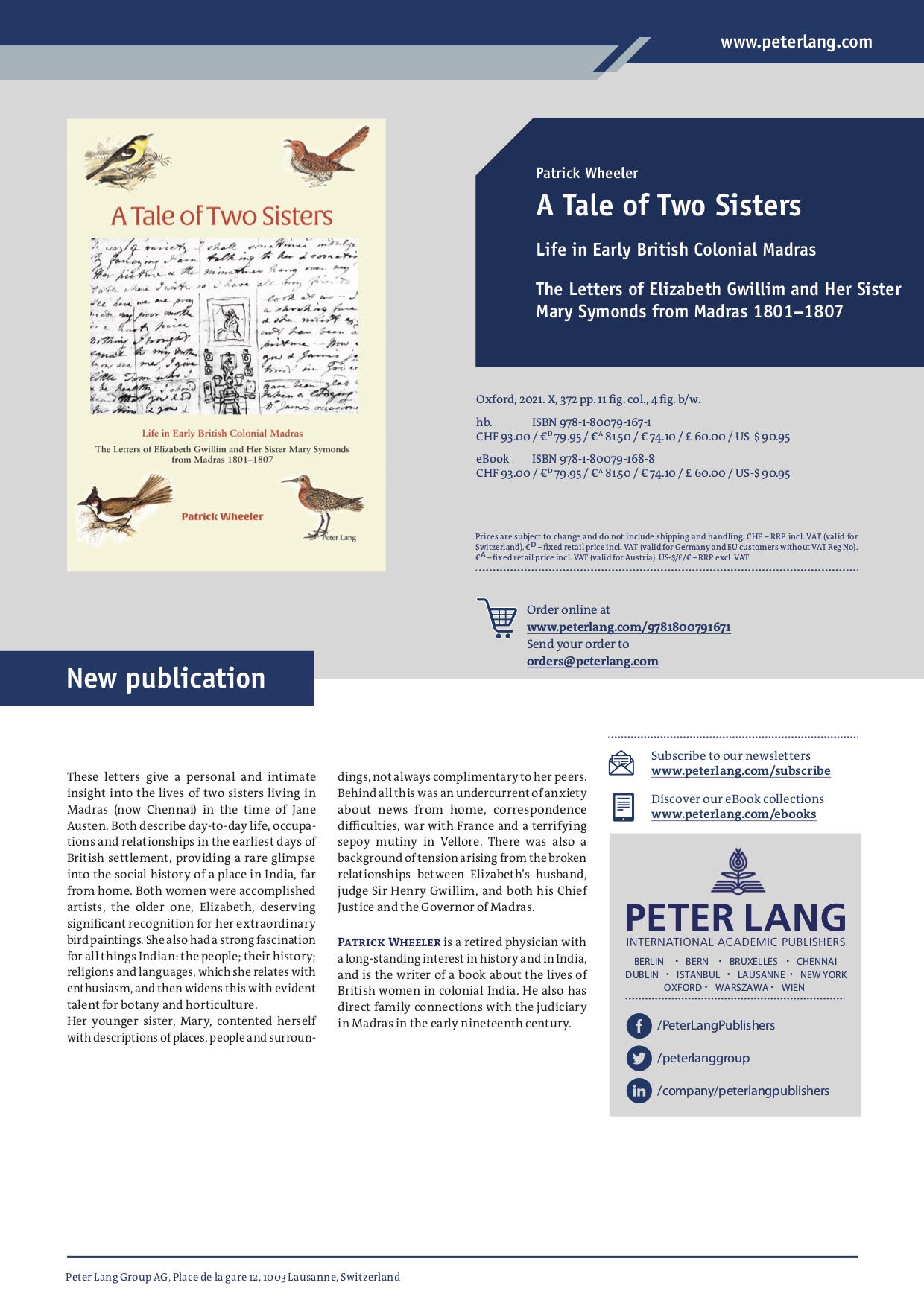
We’re pleased to draw your attention to another book by Patrick Wheeler – see also below:
Patrick Wheeler and Hubert Pragnell, both active members of the East Kent Branch of OUS have recently had books published and it is with great pleasure that we bring them to your attention.
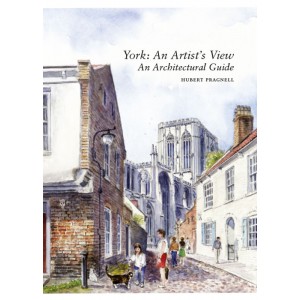
Hubert Pragnell: York: An artists View, an Architectural Guide
Published by Northern Arts Publications, Huddersfield ISBN: 978-1-909837-22-5 136pp on high quality art paper RRP £20.
A substantial introduction to the history of York & its architectural heritage with approximately ninety of Hubert’s own illustrations in watercolour and ink & wash covering the main streets and principal buildings within the wall and not least the Minster. The aim is for it to act not only as a guide to York but also the development of English architectural style from the Roman period with York being one of the few British cities which an show substantial remains for each period from the Roman. There is a glossary and bibliography. RRP£20.
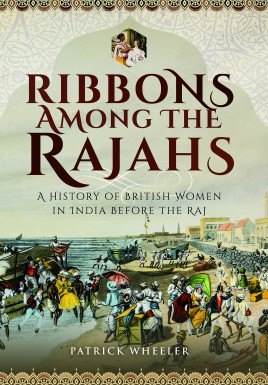
Patrick Wheeler: Ribbons Among the Rajahs A history of British Women in India before the Raj
Published by Pen and Sword History ISBN: 9781473893276 246pp RRP £25.
From the mid-eighteenth century onwards, British women started travelling in any numbers to the East Indies, mostly to accompany husbands, brothers or fathers. Very little about them is recorded from the earlier years, about the remarkable journeys that they made and what drove them to travel those huge distances. Some kept journals, others wrote letters, and for the first time Patrick Wheeler tells their story in this fascinating and colourful history, exploring the little-known lives of these women and their experiences of life in India before the Raj. With a perceptive approach, Ribbons Among the Rajahs considers all aspects of women’s lives in India, from the original discomfort of traversing the globe and the complexities of arrival through to creating a home in a tight-knit settlement community. It considers, too, the effects of the subservience of women to the needs of men and argues for the fusion of European and Indian cultures that existed before imperial times.

 ouseastkent
You must be logged in to post a comment.